Beyond the Horizon
Pushing boundaries is human, but why we push them defines what we become
By: Mario-Pierre Gaudreau
There is a particular kind of energy that emerges when humanity stands at the edge of something new, a mix of anticipation, pride, and unease that comes from knowing a line is about to be crossed. The Artemis II mission marks a return to deep space and a renewed approach to the Moon after decades of distance. It is easy, and perhaps necessary, to feel a sense of awe in the face of that moment. The scale alone demands it, as human beings prepare to leave Earth once again and move toward something that has remained a constant presence in our sky for all of recorded history.
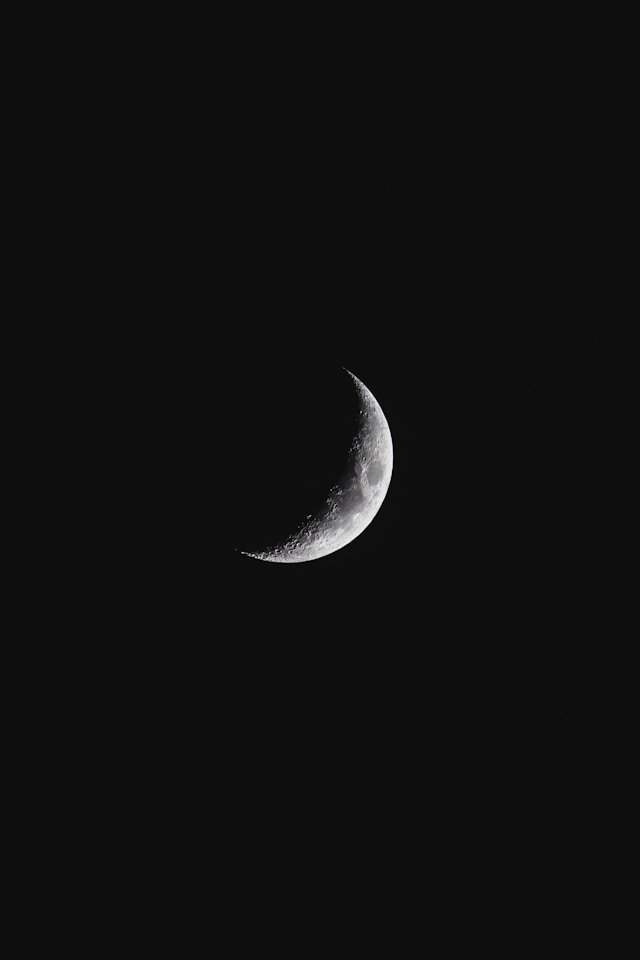
Photo by Luke Stackpoole
The Instinct to Go Further
That instinct to move outward is not new. It is one of the defining traits of our species, expressed across time in different forms but always driven by the same underlying pull. We crossed oceans without certainty, built in places that once seemed unreachable, and turned the unfamiliar into the familiar through repetition and persistence. Each generation inherits its own horizon, along with the same pressure to move beyond it.
There is real value in that impulse. Without it, there is no expansion, no discovery, no evolution of thought or capability. At its best, exploration is rooted in curiosity, in the desire to understand and to experience something simply because it exists beyond the limits of current knowledge. Movement driven by that kind of intent tends to deepen perspective, adding dimension to how we see both the world and ourselves.
When Movement Becomes Something Else
However, movement on its own is not a measure of meaning, and the same action can emerge from very different motivations that ultimately shape its impact. Pushing forward can be an expression of curiosity, but it can just as easily reflect pressure, competition, or the need to establish presence and control. From a distance, those distinctions are difficult to detect, since the trajectory appears identical, the milestones align, and the achievement is recorded in the same way, even though the internal direction behind that movement may be entirely different.
That distinction is not theoretical, nor is it removed from the reality of modern exploration. Space is no longer approached solely as a symbolic frontier, but increasingly as a domain shaped by influence, strategy, and long-term positioning. Nations and organizations return not only out of curiosity, but with an awareness of what presence may come to represent in the decades ahead. From the outside, it still looks like exploration, but beneath that surface, the motivations have become layered, and not all of them are rooted in understanding. Seen from that distance, the act remains the same, but the meaning behind it becomes less certain.
What Distance Reveals
This becomes more apparent when attention shifts away from distance and toward perspective. Missions like Artemis II are often framed in terms of how far we can go and what it takes to get there, but the more lasting impact may lie in how those journeys reshape perception. Astronauts consistently describe the experience of seeing Earth from space as transformative, not because of where they are, but because of how it reframes everything they have left behind. Removed from the surface, the planet appears whole, contained, and finite, its complexity reduced to something suddenly graspable as the scale shifts and the noise recedes.
Distance, in this sense, clarifies. It strips away immediacy and forces a broader understanding of what is actually being acted upon, and in doing so, it redirects attention inward. The act of going outward raises questions that are less about capability and more about intention, not only where we are able to go, but why we feel compelled to go there in the first place.
The Same Pattern Closer to Home
That same pattern appears in more familiar contexts, often without the same level of scrutiny. We move forward in our own lives with similar momentum, pursuing new work, new goals, and new identities, frequently equating motion with progress. In many cases, that equation holds, and forward movement reflects growth, adaptation, and the natural evolution of a person over time, but without reflection, movement can also become automatic, driven less by intention than by external pressure or an internal urgency that has never been fully examined.
The distinction between curiosity and compulsion is not always visible in action, but it becomes evident in outcome, where one tends to lead toward alignment while the other produces a quieter form of dissonance that often only reveals itself after the fact. It is entirely possible to advance significantly, to reach milestones that appear meaningful from the outside, and still find that the direction itself does not resonate, not because the destination lacks value, but because the reason for pursuing it was never clearly defined.
Beyond the Horizon
None of this diminishes the significance of what is taking place. If anything, it adds depth to it. The return to deep space represents both a technical achievement and a continuation of a long-standing human drive, one that can be appreciated for its ambition while still being examined for what it reveals. The question is not whether boundaries should be pushed, since that impulse is inseparable from who we are, but what informs that push and gives it direction.
As we move beyond the horizon once again, the distance will be measured with precision, the trajectory calculated, and the timing exact, yet what remains less measurable, but no less important, is the intention behind that movement, the underlying reason that transforms an act of expansion into something either meaningful or hollow.
In the end, it is not only the act of crossing a boundary that defines us, but the reason we chose to cross it.
About the Authors
Article: Covenlore Authors
Our site's collective authors are a group of diverse individuals who bring their unique perspectives and experiences to our collective articles. From Wiccan practitioners to spiritual seekers, our authors share a common goal of bringing quality wiccan content to you.
Recipe: Mario-Pierre Gaudreau
Mario-Pierre Gaudreau is a passionate food author who brings a unique perspective to Wiccan-inspired cuisine. With a love for cooking and a deep connection to nature and spirituality.
Related Articles